
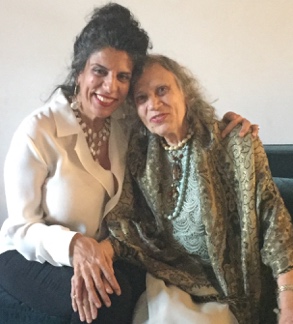
Mothering. What an impossible job. Of course, some perform in this role better than others.
I believe some women are born to be mothers, others learn on the way and yet others never get it quite right. No matter in which category our mothers belong, it is what it is, and we offspring must deal with the results of the kind of mother we got. We all benefit from reaching a certain level of acceptance of three facts: We all carry our mother inside of us, often finding ourselves behaving exactly as she did, whether we like it or not. All mothers have certain limitations, attributable to the fact that they are human. And lastly, they truly did what they knew and were capable of while raising us.
If you lost your mother and your connection has been positive, I do wish that your grieving and mourning ease and that the door opens to remembering her without pain. If your connection has been negative, I wish the day comes when you are able to move beyond the anger, blame or hurt. These emotions use up a huge portion of your energy, and dealing with these reactions benefits you more than anyone else.
It is interesting how siblings hold different perceptions of the same mother and how our own perceptions can change from when our mother was in life vs when she is gone. Somehow, when she leaves, her positive attributes shine brighter than her limitations. I see no problem with that clarity.
My mother left on January 14th, 2026.
After her death my home was filled with bouquets from family and friends as a tribute to her passing. How strange to look at those gorgeous flowers which were there because my mother was not. Flowers simultaneously bringing joy and a painful reminder.
Death brought the difference between grieving and mourning into focus. I did not even know there was a difference until these two sensations entered my body. For me, grieving started ten years before her actual death, when my mother began exiting slowly due to dementia. This grieving carried a sadness and a helplessness that motivated me to act in every way I could to make her life more comfortable. I watched her leaving while she was living. Stress and the attempt to protect her never left my body. I would think and talk about Keti every day, I would try constantly to plan and orchestrate ways to make her existence more pleasant.
The night she died the volume of this grieving reached its peak. After her burial, grieving suddenly morphed into something different. I entered mourning. It took me some time to realize there was a shift in the way I was missing and remembering my mother.
The stress left my body. The way I was thinking about her changed almost immediately. I allowed myself to open the door, until then sealed, of childhood memories. While she was in life, suffering from dementia, any memory of her being healthy and vibrant hurt to no end. After her funeral, I began to envision her face with her constant smile, to allow myself to remember her words, gestures, actions…
The pain reached an unimaginable depth in my body. It entered my bones and stayed there.
A strange silence and numbness entered my existence and stayed there.
Mourning was deep, silent and personal. I did not want to talk to anyone about it and even if I did, I could not describe it. I could and did talk to people about my mother but not about the hold mourning had on me. There was simply a total lack of vocabulary; and this loss for words stayed there.
How strange while being in this mourning to simultaneously feel such joy, for my mother was not suffering anymore. Her spirit galloping free without pain.
I have no idea how long this mourning will stay; I guess this is what makes it so personal. It differs from person to person. One more of life’s mysteries—how we grieve and mourn people who touched our lives profoundly.
What I do have an idea about, though, is how to respond to someone who lost a mother. The actions from some family and friends showed me. First, in conveying condolences, staying away from those established, traditional sayings. Making it personal, finding and offering one’s own words, soothes the recipient of the wishes more deeply. Most definitely, a gesture more than sending a text is needed, yes, even in this age of impersonal communication. A card, flowers, a visit, a phone call, even just a voice message. Do not assume the mourner does not want to be “disturbed”. Showing up through actions offers solace even when the mourner is not aware they need it since they are not in the mood to talk, answer the door or the phone. Actions of support penetrate their grieving body and that helps. It further sends the message that someone is there when they are ready to reach out.
Losing our mother is a most significant event no matter what kind of connection we had with her. We have one mother and that mother exits one time only.
Below is a poem paying tribute to my mother, Keti.
MY MOTHER KETI
slender
green eyes
bright constant smile
a heart ignorant of hate
so what if at the end she got her thoughts scrambled
so what if she confused her words
she spoke through actions
actions that never refused
offering, doing, gifting
generously
always
actions that spread giving
quietly
a true saint living at home in Lynbrook, New York
performing daily domestic miracles
my mother
who lived a dependent life
who could not give advice
who did not philosophize
who did not speak English
who did not know how to be there in difficult times
but
gave “mothering” a new meaning
not written in cards
my mother
wrote her own card with
non-ending, spontaneous, innocent, selfless, flowing, authentic, heartfelt, pure
LOVING